When to start
A good sign is that your child already writes the name in print without looking at a model. Before that, cursive adds a second set of shapes to a word they are still learning. Schools differ a lot: some teach cursive early, some in later grades, some hardly at all. Ask the teacher, and if the school doesn’t teach it yet, there is no need to get ahead.
Which cursive our sheets use
Our cursive sheets use Playwrite US Trad, a font modeled on traditional American school cursive. If your school teaches another model, a few letters may look slightly different. When in doubt, follow the school.
An order that makes it easier
- Big and in the air. Write the name in the air with the whole arm, on a fogged-up window or with a finger in a tray of salt. Big movements first, small ones later.
- The capital, apart. In most names the capital is the hardest letter in cursive. Practice it alone a few times before the rest.
- The joined lowercase. Show that the pencil stays on the paper until the end of the word, and point out where each letter connects to the next.
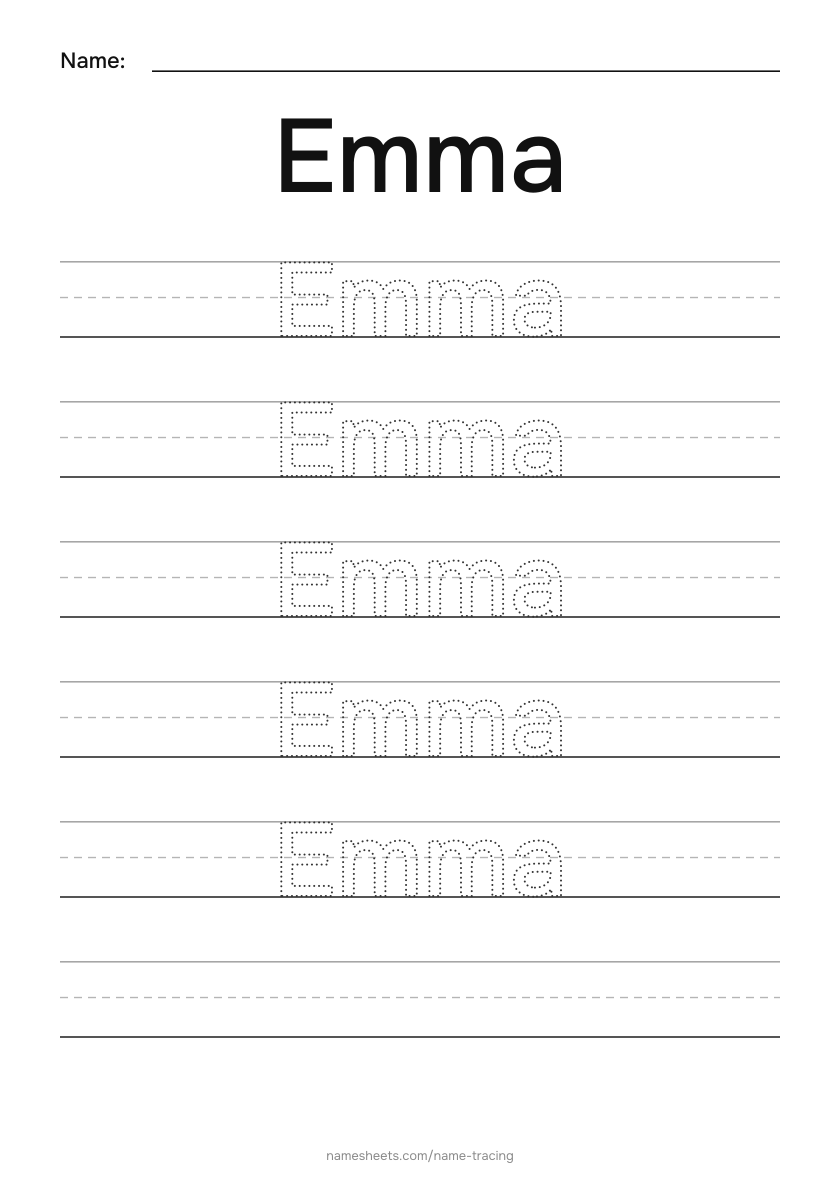
- The sheet. First trace the gray model, then write it on the lines. Open the cursive sheet.
- A real use. Signing a drawing or a card in cursive feels grown-up, and that is motivation.
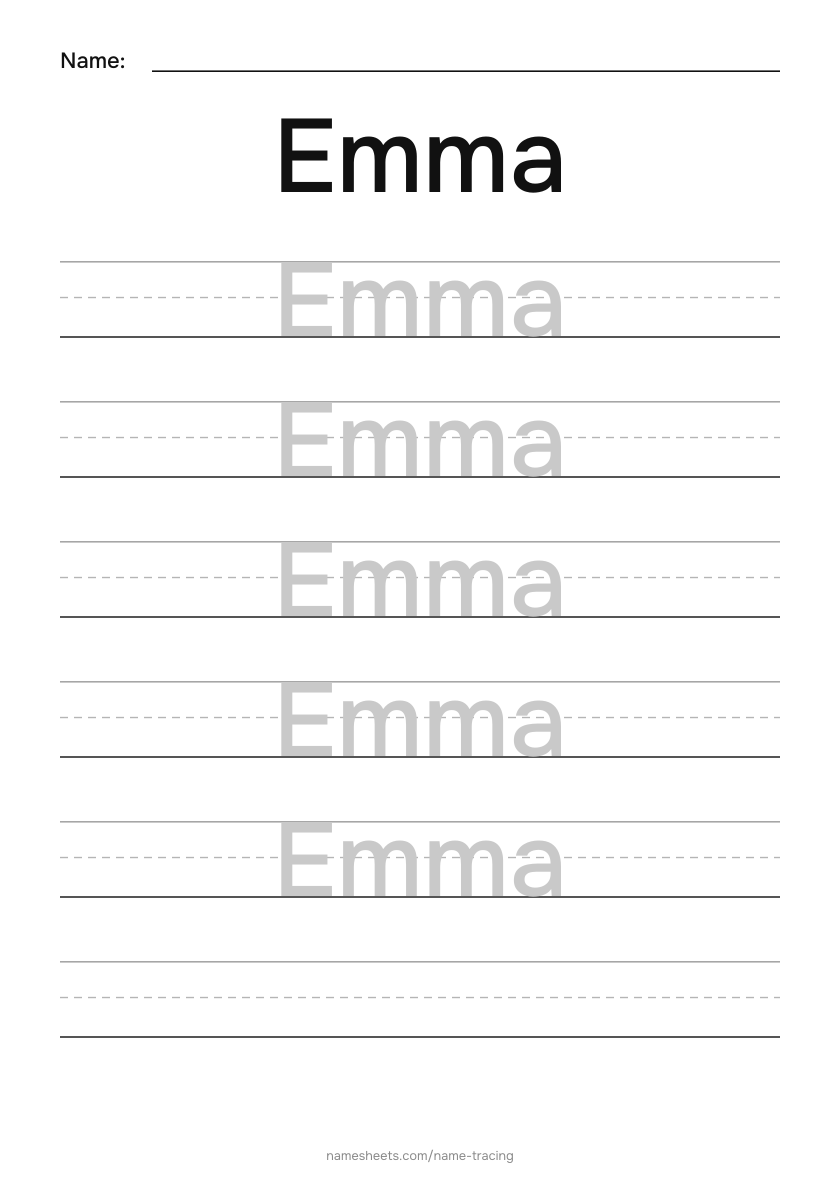
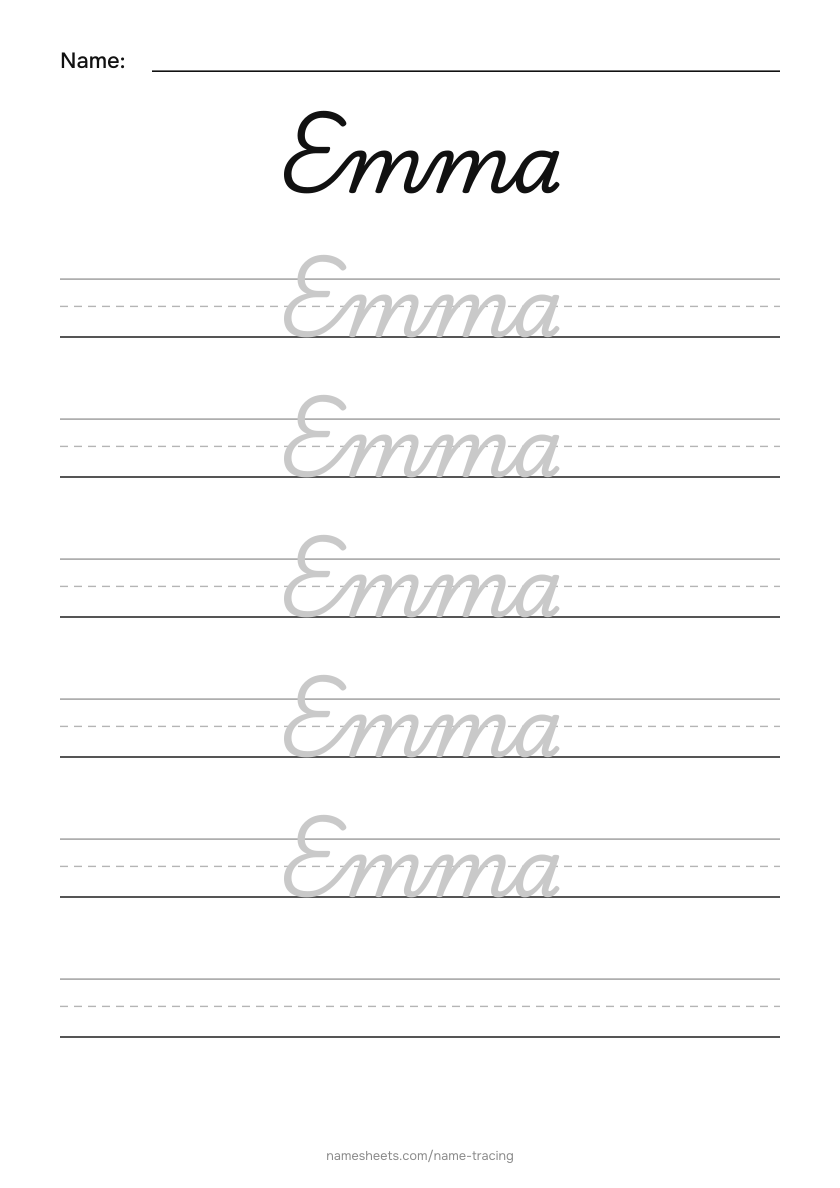
Tap a sheet to open it, type the name and print.
Cursive ready for 200 names
The most common names have their own page with the cursive sheet already made, such as Olivia, Emma or Liam. For any other name, type it in the tool and choose “Cursive”.
Small things that help
- Short sessions: two or three tries of the name, not a full page every day.
- Compare with yesterday’s attempt, not with an adult’s handwriting.
- Left-handed kids often find it easier with the paper turned a little; let them find the angle that works. More in our page for left-handed kids.